Your new Action Building needs a stable, solid place to rest. The surface you choose for your shed is just as important as the building itself, affecting its longevity, stability, and overall performance. Because we deliver our buildings pre-assembled, preparing the right foundation is a critical step you must take before our truck arrives.
Let's explore the most common types of terrain for shed installation in Alabama and Georgia. We'll examine the pros and cons of each and provide the preparation tips you need to make an informed decision.
Installing Your Shed on Grass or Dirt
Placing a shed directly on the ground is a common choice, but it requires careful consideration. Not all grass or dirt lots are created equal.
- Pros: This is often the most cost-effective option, as it may not require extensive materials or labor. It allows for a very natural integration of the shed into your landscape.
- Cons: Grass and dirt are susceptible to moisture, which can lead to settling and shifting over time. An uneven surface can put stress on the shed’s steel frame, potentially causing doors to misalign. Without a proper barrier, you may also have issues with weeds and pests.
- Preparation Tips: Your site must be as level as possible. Identify a high, dry spot in your yard to avoid drainage problems. You will need to clear all vegetation, rocks, and debris from the area. While our delivery team will level the building on solid concrete blocks, starting with a flat, compacted surface is essential for long-term stability.
Creating a Gravel Pad Foundation
A dedicated gravel pad is one of the most highly recommended foundations for any portable building. It offers a superior balance of stability, drainage, and affordability.
- Pros: Gravel provides excellent drainage, preventing water from pooling around and under your shed. This keeps the base of the building dry and reduces the risk of ground erosion. It creates an incredibly stable, level surface that won't shift or settle easily.
- Cons: It requires more upfront work and cost than a simple grass site. You will need to purchase and transport materials like crushed stone and landscape fabric.
- Preparation Tips: To build a proper gravel pad, start by marking out an area that is at least one foot larger than your shed's dimensions on all sides. Excavate 4-6 inches of topsoil, lay down a weed barrier fabric, and fill the area with crushed stone. Rake the gravel to create a perfectly level surface and tamp it down to ensure it is compacted and firm.
Using an Existing Concrete Slab
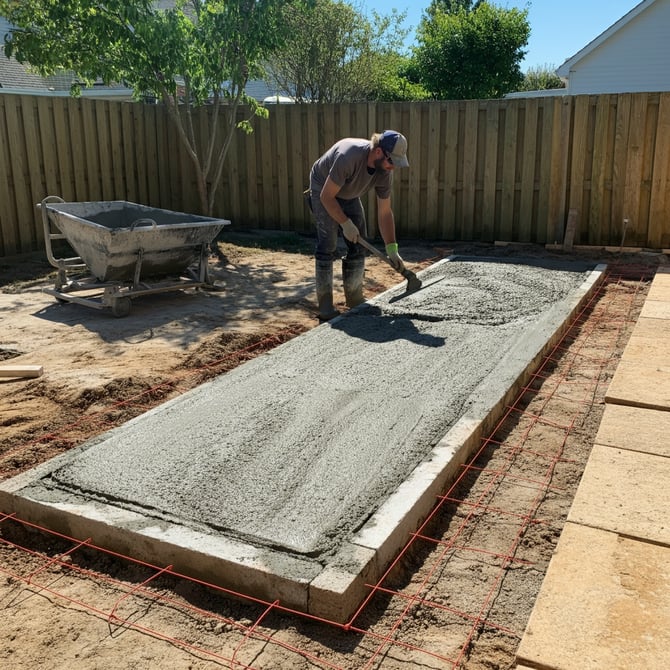
If you have an existing concrete slab or are planning to pour a new one, it can serve as a rock-solid foundation for your Action Building.
- Pros: Concrete provides the ultimate level, stable, and permanent foundation. It creates a durable floor, eliminates any concerns about moisture from the ground, and makes it easy to keep the interior clean.
- Cons: This is the most expensive and labor-intensive option. Pouring a new slab requires significant site work, and if you ever decide to move the shed, the slab remains. An existing slab may not be perfectly level, requiring checks before installation.
- Preparation Tips: Ensure the concrete slab is completely level and free of major cracks or damage. The slab must be large enough to fully support the entire base of the shed. Before our delivery, sweep the slab clean of any dirt or debris to ensure a smooth installation process.
Placing Your Shed on an Asphalt Driveway
An existing asphalt driveway can also be a suitable location for your shed, provided it is in good condition.
- Pros: Like concrete, an asphalt surface is already level and provides a solid base. It offers good durability and requires minimal additional site preparation if the driveway is already in place.
- Cons: Asphalt can soften in the high heat common to Alabama and Georgia summers, which could potentially lead to minor settling under the building's pressure points. It is also a permanent surface that may not be ideal if you want the shed located elsewhere in your yard.
- Preparation Tips: Inspect the asphalt for any significant cracks, potholes, or soft spots. The area must be level to ensure proper shed stability. Before delivery, thoroughly clean the surface where the shed will be placed.
Prepare Your Site for a Flawless Delivery
No matter which surface you choose, proper preparation is the key to a successful installation and the long-term durability of your investment. Taking the time to create a level and stable site ensures that your Action Building will serve you well for decades.
To guide you through every step of the process, we have developed a detailed checklist.
Download our free Site Preparation Checklist today to make sure your property is ready for delivery!